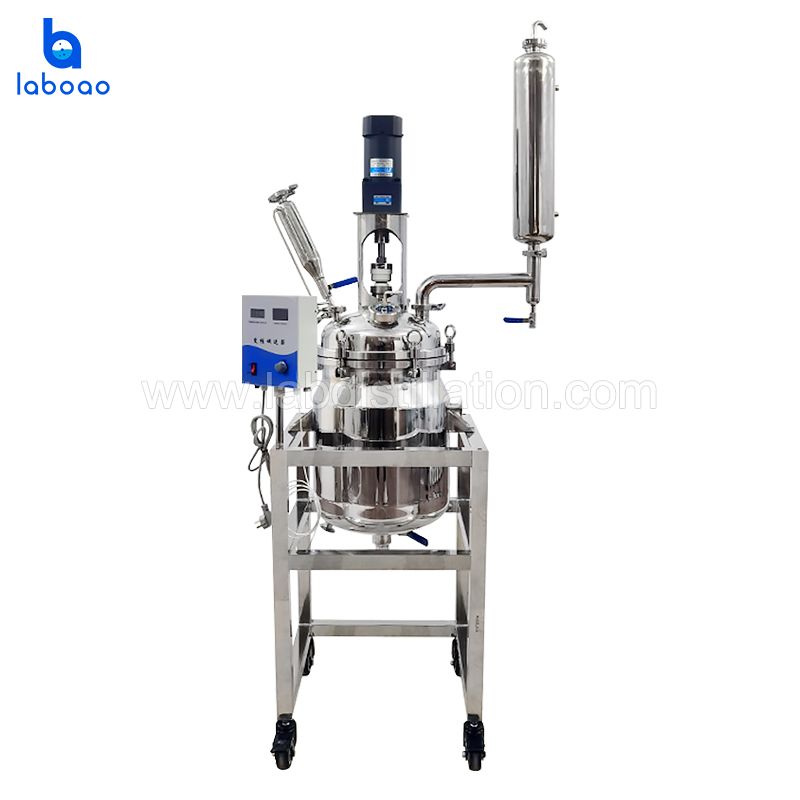
I. Double-Layer Glass Reactor User Guide
The double-layer glass reactor is a vertical, double-layered structure, both layers made of high-borosilicate glass. Reactants are placed inside the reactor for stirring and reaction, while different heat transfer media are circulated in the jacket to heat or cool the material inside the reactor. Under constant temperature conditions, stirring reactions can be carried out in the sealed glass reactor under normal or negative pressure, and reflux and distillation of the reaction solution can be performed. After the reaction is complete, the material can be discharged from the outlet at the bottom of the reactor, making operation extremely convenient. The double-layer glass reactor is a commonly used biochemical instrument, widely used in modern fine chemical, biopharmaceutical, and scientific research industries. It can perform concentration, distillation, fractionation, separation, and purification reactions under constant speed, constant force, and constant temperature conditions, making it an ideal instrument for teaching, experiments, pilot production, and large-scale production.
Different heat transfer media can be circulated in the jacket of the double-layer glass reactor according to process requirements: high-temperature heat transfer oil (up to 300℃) can be circulated to heat the material inside the reactor for reactions; or low-temperature refrigerant (down to -80℃) can be circulated to remove the heat generated by exothermic reactions, achieving the desired reaction state. The glass reactor can operate under normal or negative pressure conditions, with a pressure range of -0.1 to 0 MPa inside the reactor. The working pressure range in the glass reactor jacket is ≤0.03 MPa. The dead-angle-free PTFE bottom discharge valve ensures no dead corners in the reactor, guarantees a tight seal and no leakage, and allows for complete discharge without residue. The nominal volumes of the double-layer glass reactor are: 10L, 20L, 30L, 50L, and 100L (as well as small-scale versions).
II. Features of the Double-Layer Glass Reactor
1. Equipped with an explosion-proof motor, the motor is spark-free, safe, reliable, and has a long service life.
2. The entire set of glass instruments is made of GG17 high-borosilicate glass, which has excellent chemical and physical properties.
3. Hot oil can be circulated through the glass jacket for heating reactions, and refrigerant can be circulated for low-temperature reactions. The reaction takes place at room temperature, and the glass jacket is circulated with tap water to quickly remove the reaction heat and maintain a constant temperature.
4. Sealed with PTFE material and special composite sealing rings, it is resistant to various solvents and maintains a high vacuum, making it very convenient to use.
5. The bottom discharge port uses a PTFE valve, ensuring no dead corners in the container and allowing for easy removal of solid materials.
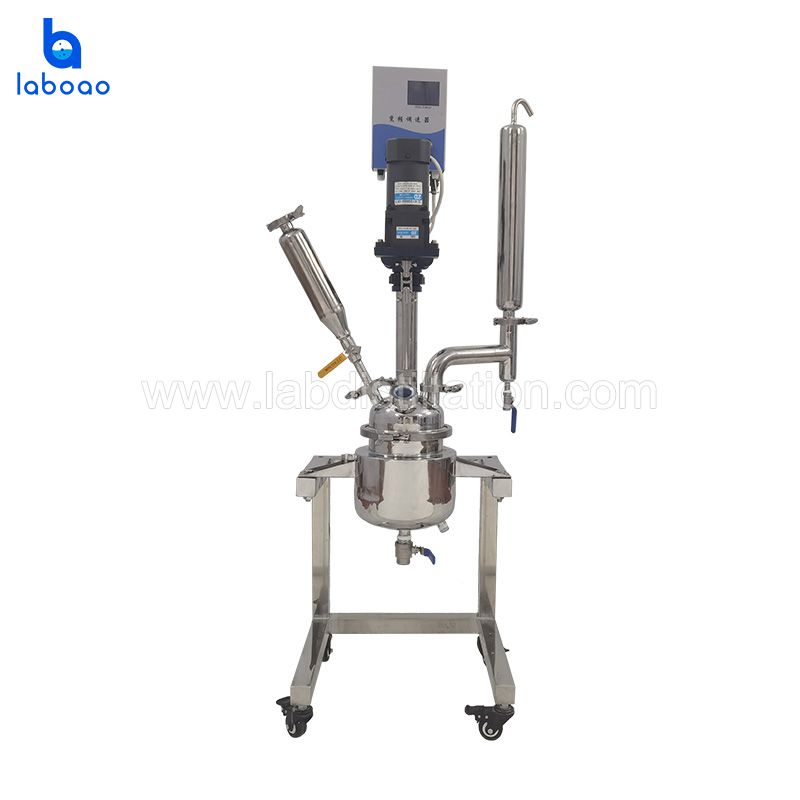
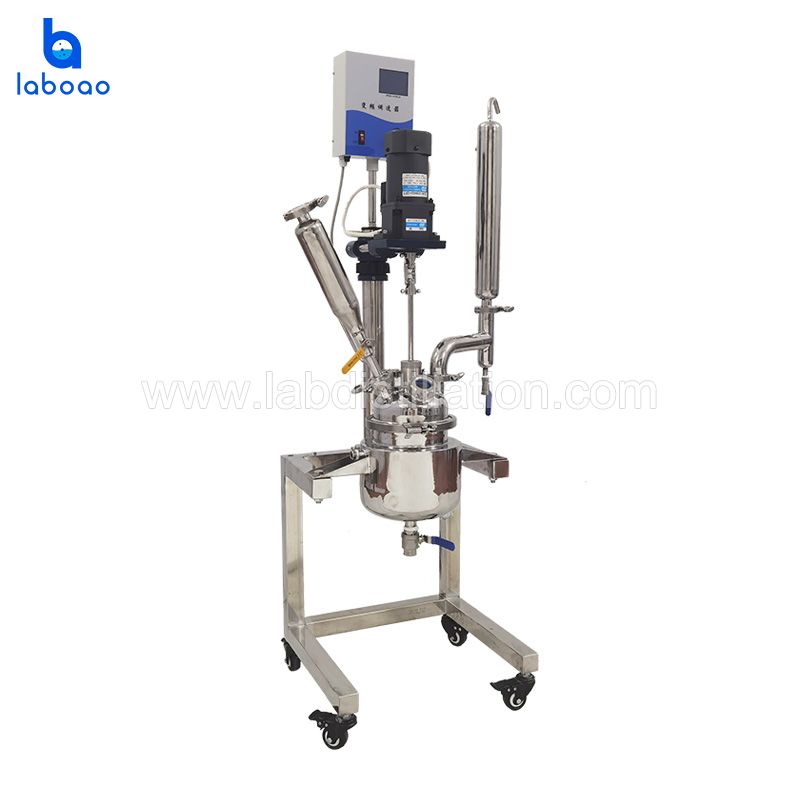
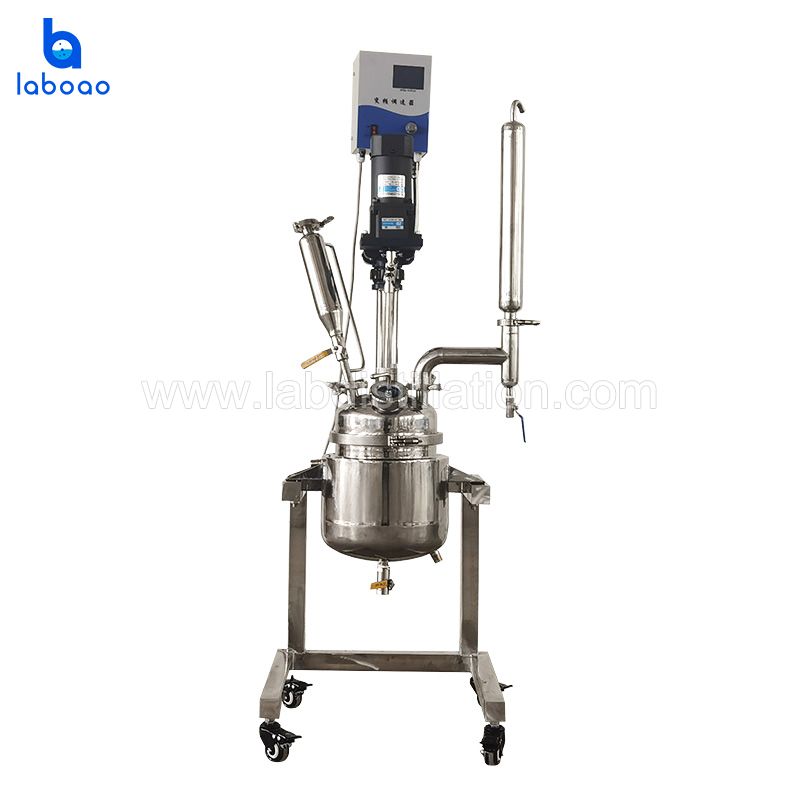
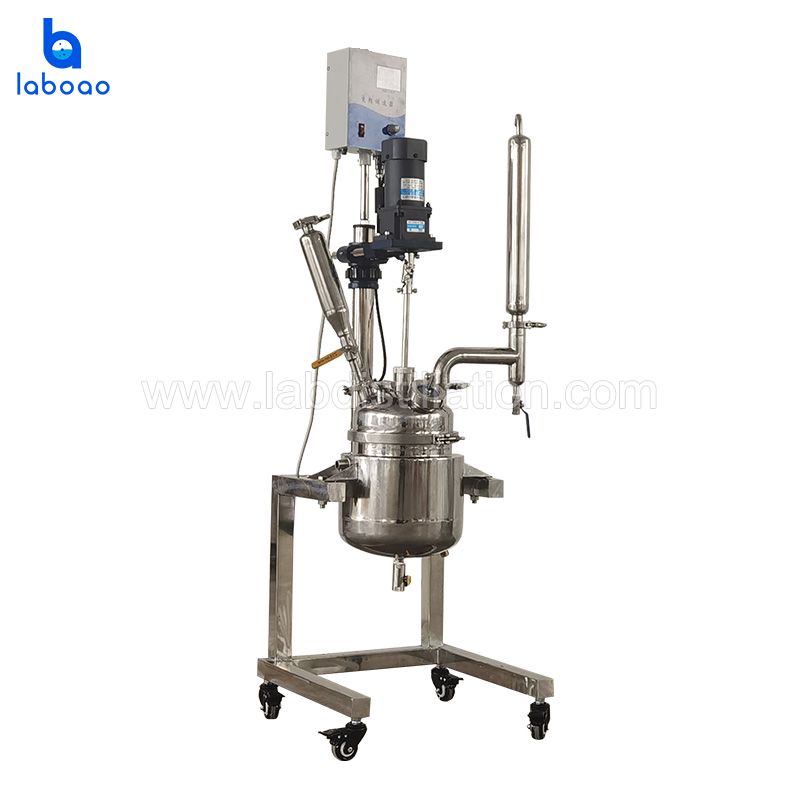
6. The six-neck reaction vessel lid features an extra-large opening for easy cleaning, and standard ports allow for the assembly of various devices such as dropping, reflux, and distillation apparatus.
7. It has a good stirring and sealing system, which is corrosion-resistant and wear-resistant, and ensures effective sealing inside the reactor.
8. Standardized connection methods make disassembly very convenient. The standard ports on the reactor lid have spherical ground joints, which reduces vibration of glass components and ensures the safety and flexibility of the glass component connections.
9. A matching glass temperature measuring tube is included, and a digital temperature display can be optionally added. This ensures real-time temperature feedback and maintains the seal inside the reactor, isolating the thermometer probe from contact with the materials inside the reactor and preventing contamination.
10. The structure is reasonable and easy to use. The stainless steel support frame with four universal wheels is easy to install and convenient to operate.