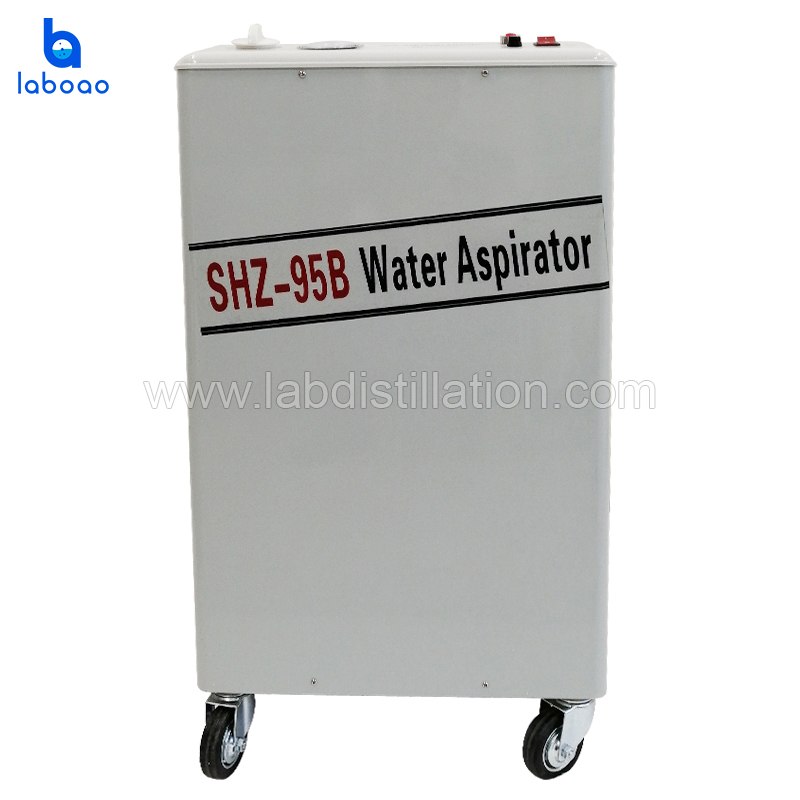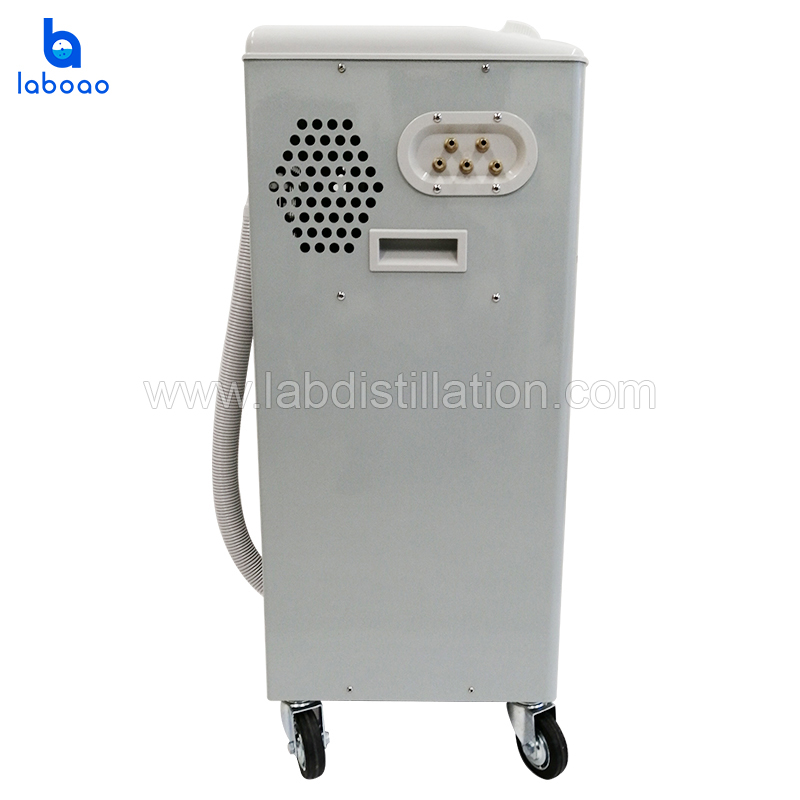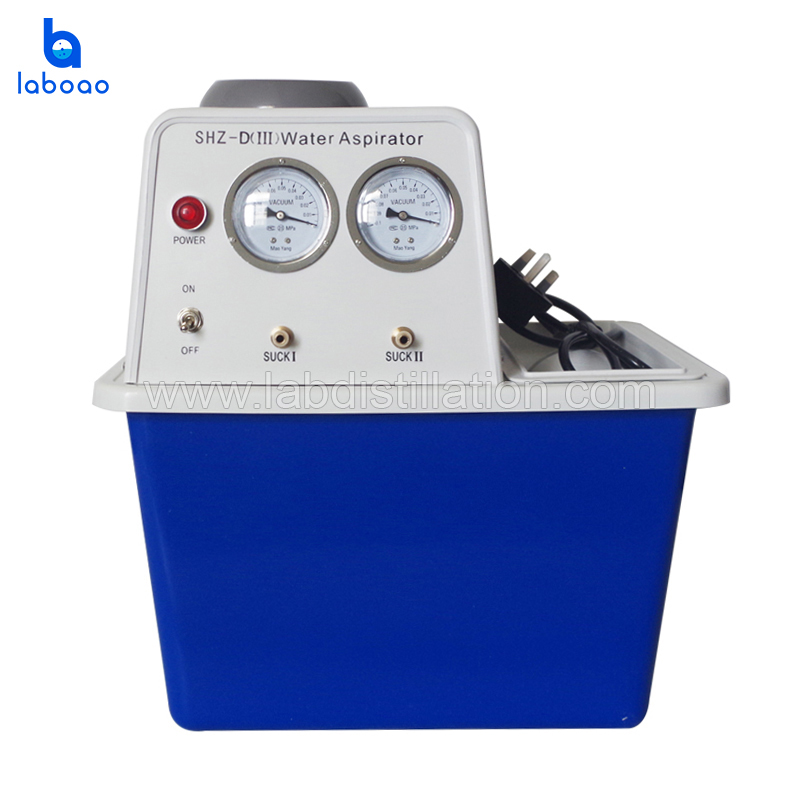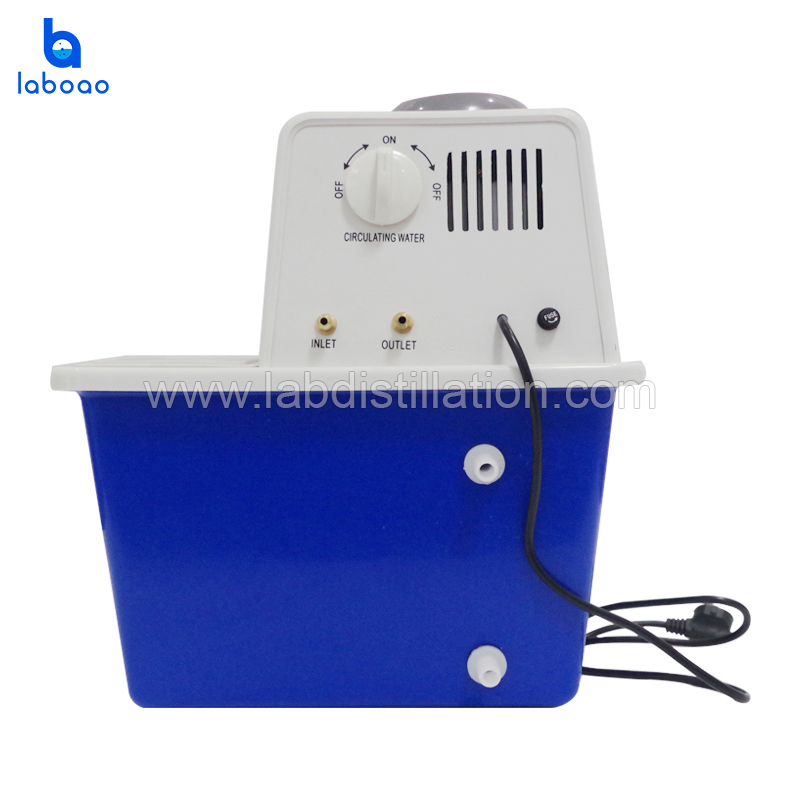
This article will break down the core points of equipment management in detail from three aspects: daily operation points, periodic maintenance methods, and solutions to common faults.
Part 1 Daily Use: Key Operation Points
Standardized daily operation is the first line of defense against equipment failure. Emphasis should be placed on four dimensions: water quality, backflow prevention, environmental adaptability, and operating habits.
1. Water Quality Management: The Core of Equipment Stability
Water quality directly determines the wear rate of internal components and is of paramount importance in daily management.
(1) Prioritize the use of distilled or deionized water, and avoid using hard water. Minerals in hard water will gradually condense into hard scale, adhering to the impeller surface and the inner wall of the water passage, leading to a decrease in vacuum and flow rate. In severe cases, it can increase the motor load and even cause the motor to seize up.
(2) Change the water in the tank regularly, ideally at least once a week. If solvent vapor is frequently extracted during experiments, or if the water becomes turbid or contains impurities, the water should be changed immediately to prevent contaminants from clogging the pipes. (3) Before starting the machine, the water level must be checked to ensure that it is within the range specified in the product manual. If the water level is too low, the equipment will not be able to pump water and a vacuum cannot be formed; if the water level is too high, it will easily cause water spraying, which will affect the experimental environment and equipment safety.
2. Anti-backflow: Key to Avoiding Equipment Damage
Backflow is a common problem leading to internal corrosion, component damage, and experimental failure. How to prevent backflow?
(1) Connect a buffer bottle in series between the vacuum pump and the experimental setup. The buffer bottle can temporarily contain backflowing liquid, preventing it from directly entering the pump body.
(2) Use a check valve for mechanical protection, which can effectively prevent liquid from flowing backward.
3. Environment and Load: Adapting to Equipment Operating Requirements
The operating environment and load type of the equipment will affect its service life. Operating conditions should be planned reasonably according to the equipment characteristics.
(1) The equipment should be placed in a well-ventilated area, avoiding direct sunlight. The ambient temperature should be controlled between 5-40℃. Good ventilation helps dissipate heat and prevents high temperatures from affecting motor performance.
(2) If corrosive gases or organic solvent vapors need to be extracted, it is recommended to install a corresponding absorption bottle and cold trap (such as using a liquid nitrogen cold trap to condense the solvent) before the inlet. Untreated corrosive gases will directly corrode the internal components of the pump body, shortening the equipment's lifespan.
4. Good Operating Habits: The Foundation for Reducing Human-Induced Failures
Standard operating habits can reduce failures caused by human error. The following two checks should be performed before each use:
(1) Check system airtightness: Before starting the machine, confirm that all vacuum interfaces, pipes, and connections are tight. Gaps will cause air leakage, affecting the vacuum level. Adjust or replace sealing components promptly.
(2) Check equipment placement: Ensure the pump body is placed on a level, stable surface to avoid increased vibration, noise, or damage to internal components due to a tilted surface.
Part 2 Daily Maintenance: The Core of Extending Equipment Lifespan
Regular maintenance can slow down the aging of equipment components and reduce the probability of failure. Targeted maintenance operations should be performed according to a fixed schedule.
Maintenance cycle | Maintenance items | Specific operations |
After each use | Daily cleaning | 1. Wipe the pump body surface dry with a clean cloth to prevent residual liquid from corroding the casing;
2. If the pump will not be used for a short period of time, empty the water tank. |
Weekly or as needed | Water change and water tank cleaning | 1. Completely drain the old water from the tank; 2. Wipe the inside of the tank with a soft cloth to remove any attached biological slime and scale; 3. Add fresh water to the designated level. |
Monthly or quarterly | System cleaning (descaling) | 1. Drain the water from the tank; 2. Add diluted citric acid or acetic acid solution to the tank; 3. Turn on the equipment and allow the cleaning solution to circulate for 15-30 minutes; 4. Drain the cleaning solution and thoroughly rinse the tank and pipes with plenty of clean water 2-3 times to prevent residual acid from corroding the components. |
Every six months | Check the seals and pipes | 1. Check the sealing ring on the suction nozzle for signs of aging or cracking. Replace it immediately if damaged. 2. Check the vacuum tubing for signs of aging or cracking. Replace the tubing immediately if any problems are found and the tubing should be shut down for an extended period. |
Long-term discontinuation | Evacuation and Protection | 1. Thoroughly drain all water from the water tank and pump body to prevent components from cracking due to freezing at low temperatures or internal corrosion from accumulated water; 2. Clean and dry the inner and outer surfaces of the equipment; 3. Cover the exhaust port with a dust cap to prevent dust from entering; 4. Store the equipment in a dry, dust-free environment. |
Part 3 Common Faults: Quick Troubleshooting and Handling Solutions
If an abnormality occurs during equipment operation, the cause must be accurately located based on the fault symptoms. Troubleshooting should follow the principle of "starting with the easy and then moving to the difficult" to avoid blind disassembly.
Fault phenomenon | Possible reasons | Handling measures |
The motor is not working. | Fuse damage | Replace with the same type of fuse |
Capacitor failure, burnt-out motor windings, severely worn and jammed bearings, jammed impeller, circuit fault. | Stop using the equipment immediately and contact a professional repairman for inspection. | |
The water temperature in the tank is too high. | Check the experimental load to determine if the water temperature rise is caused by the extraction of high-temperature gas; replace the cold water if necessary. | |
Motor speed is too low | Check if the power supply voltage is stable and ensure that the voltage meets the equipment's rated requirements. | |
The ejector and check valve are clogged with dirt. | Disassemble the ejector and check valve, rinse them thoroughly with clean water, and then reassemble them. | |
The ejector and check valve were corroded. | Replace the corroded ejector or check valve. | |
Clogged inlet pipe filter | Remove the filter screen, clean off any attached impurities, and then reinstall it. | |
Vacuum tubing blockage or rupture | Unblock clogged pipes; if a pipe is ruptured, replace it with a new one. | |
No vacuuming | Impeller detached or motor not started | Stop using the equipment and contact a professional repairman. |
Vacuum gauge reading is inaccurate | Vacuum gauge has water ingress or air leakage. | Remove any water from the vacuum gauge and adjust the needle to zero; check the gauge body for leaks and repair any leaks. |
Motor overheating and excessive noise | Bearing wear or impeller deformation | Stop using the equipment and contact a professional maintenance technician to replace the bearings or impeller. |
Unstable voltage or low voltage | Install a voltage regulator, or wait until the power supply voltage is stable before using the equipment. | |
Water leakage | Loose parts or aging seals | Tighten any loose parts; if the seal is worn out, replace it with a new one. |
Water tank ruptured | Replace the water tank |
Part 4 Core Summary: Key Principles of Equipment Management
(1) Prevention First: 90% of equipment failures stem from improper use or water quality issues. Regular water changes and descaling can prevent most common failures and reduce maintenance costs.
(2) Orderly Troubleshooting: When encountering a failure, start with simple checks such as water level, power supply, and pipe sealing, then gradually check complex components like motors and impellers to avoid overlooking fundamental issues.
(3) Safety First: Before any internal repairs, always unplug the power cord to prevent electric shock. Repairs involving core components such as motors and impellers must be performed by qualified technicians to avoid accidents or further equipment damage.